What is enzymatic toothpaste?
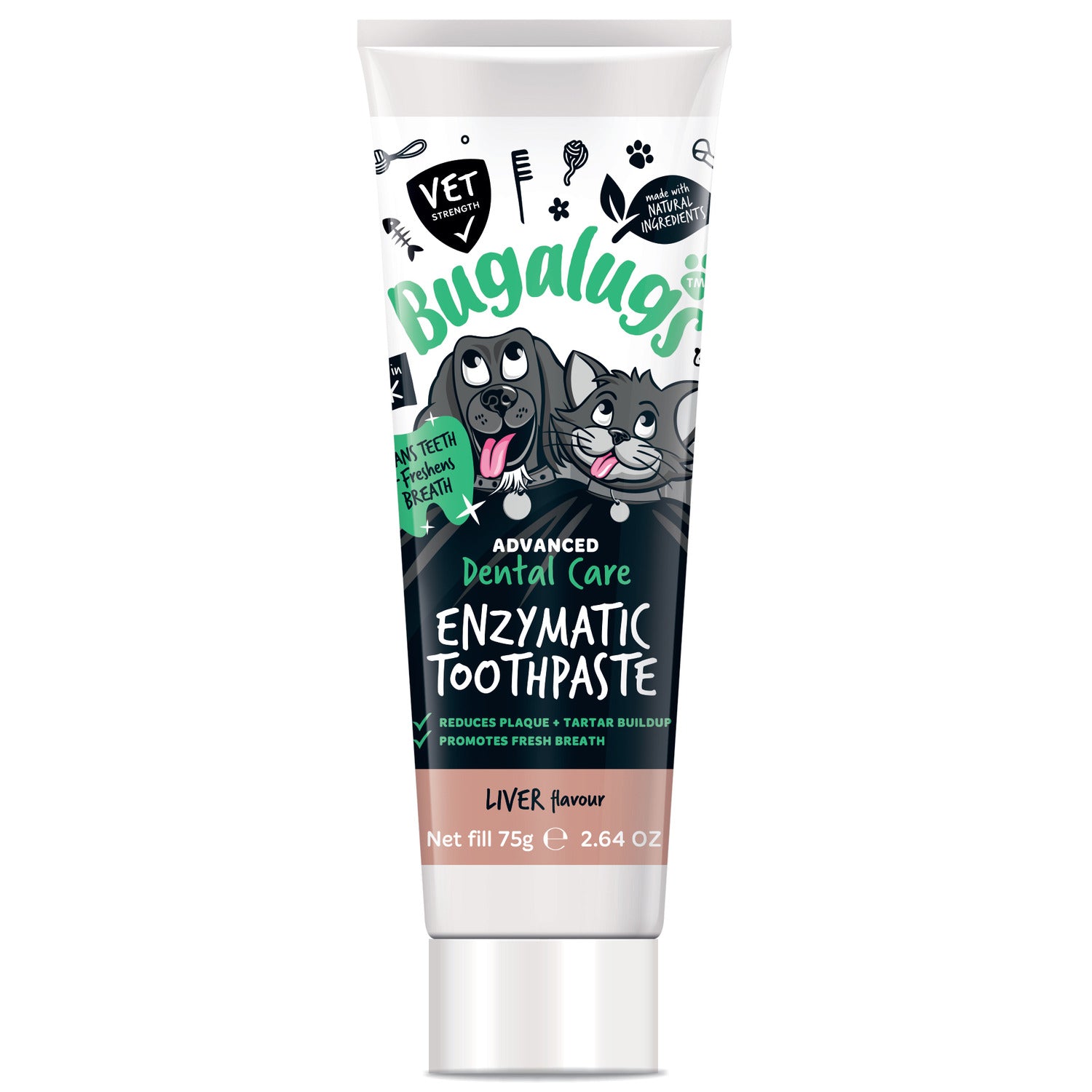
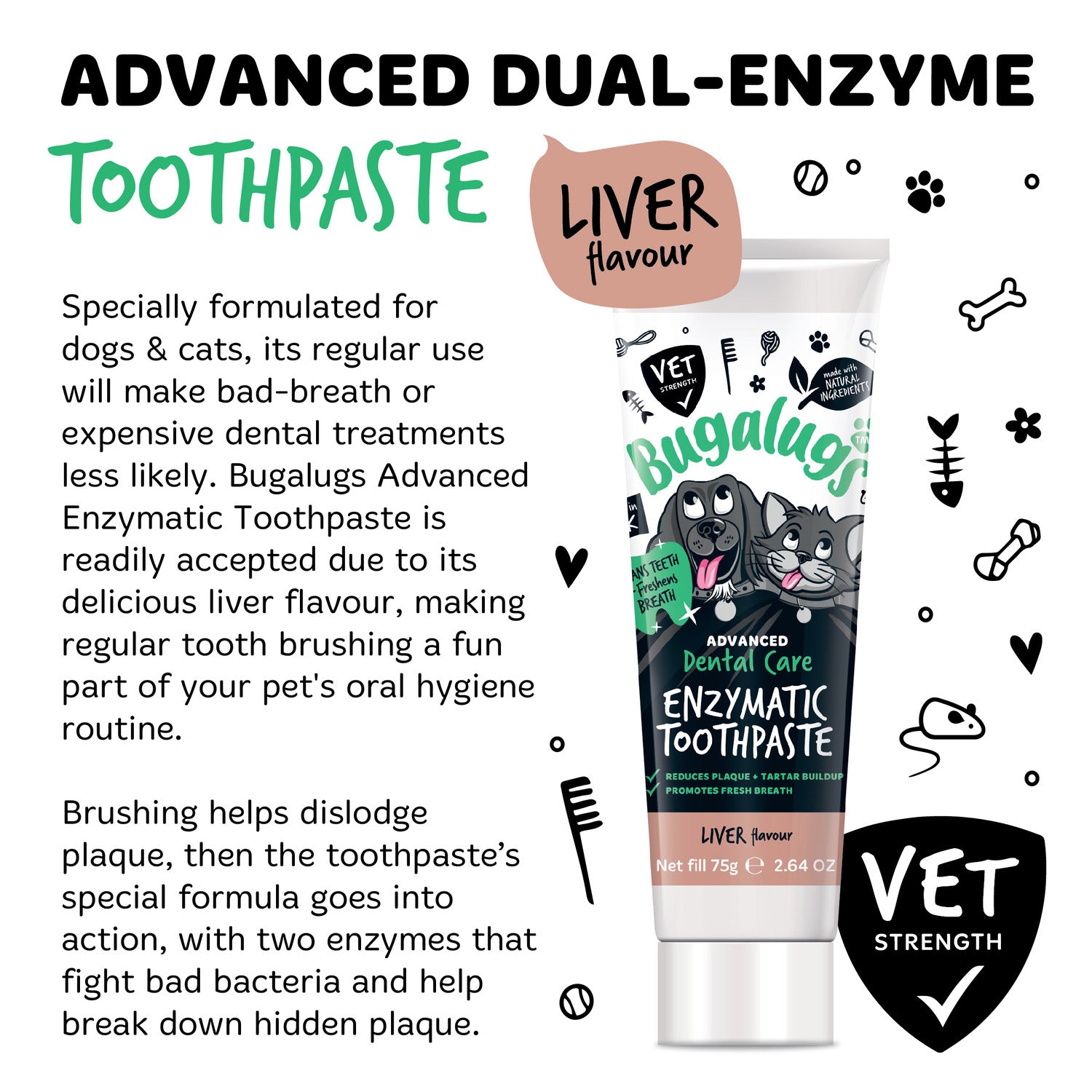
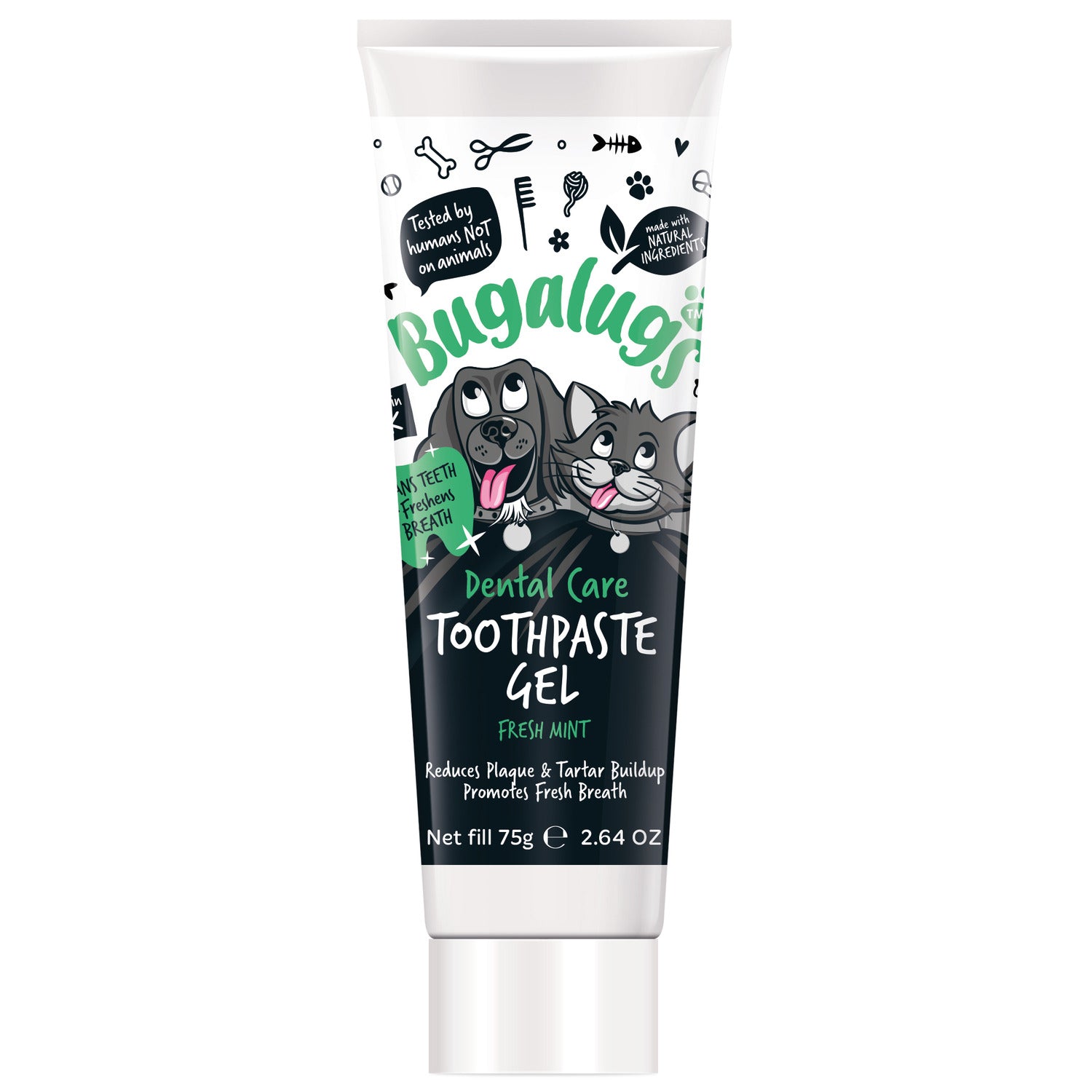
Enzymatic toothpaste is a pet toothpaste that contains enzymes which break down plaque and target the bacteria that cause bad breath. It keeps working on the teeth after brushing, including in places the brush doesn't reach.
How does enzymatic toothpaste work?
The enzymes break down plaque, the soft film on teeth, before it hardens into tartar. Our toothpaste uses two:
- Protease: breaks down plaque before it hardens into tartar
- Glucose oxidase: targets the bacteria behind plaque and bad breath
It also contains hydrated silica, a gentle polish that helps lift food debris and stains when you brush.
Can I use human toothpaste on my dog or cat?
No. Human toothpaste can contain xylitol, which is toxic to dogs, and fluoride, which isn't meant to be swallowed. Dogs and cats can't spit toothpaste out, so always use one made for them.
How do you brush a dog's or cat's teeth?
Brush in small circles along the gum line, working round both sides of the mouth. If your dog or cat isn't used to it, build up over a week or two:
- Days 1–3: let them lick a little toothpaste off your finger, so they get to like the taste.
- Days 4–7: lift their lip and rub the paste along their teeth and gums with your finger.
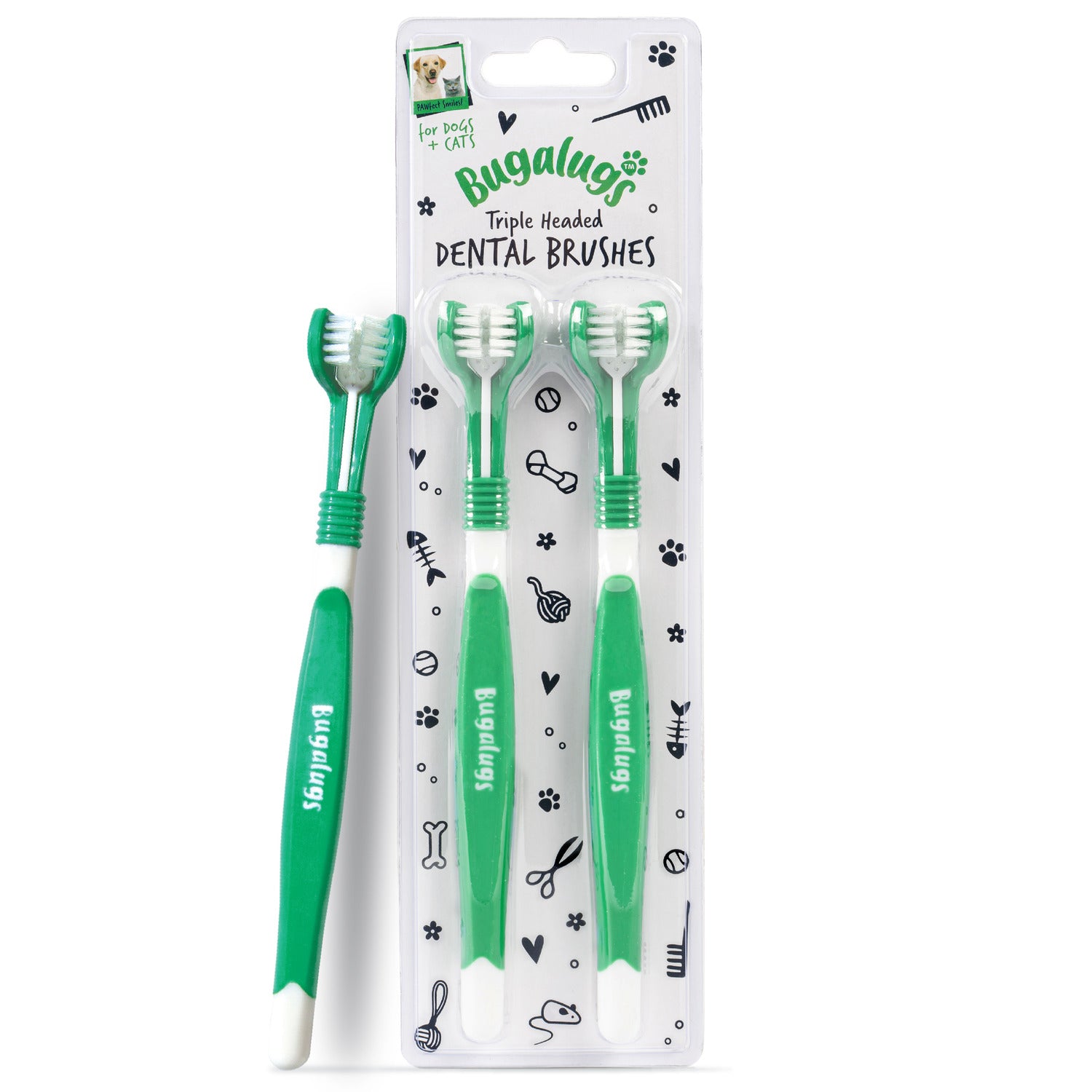
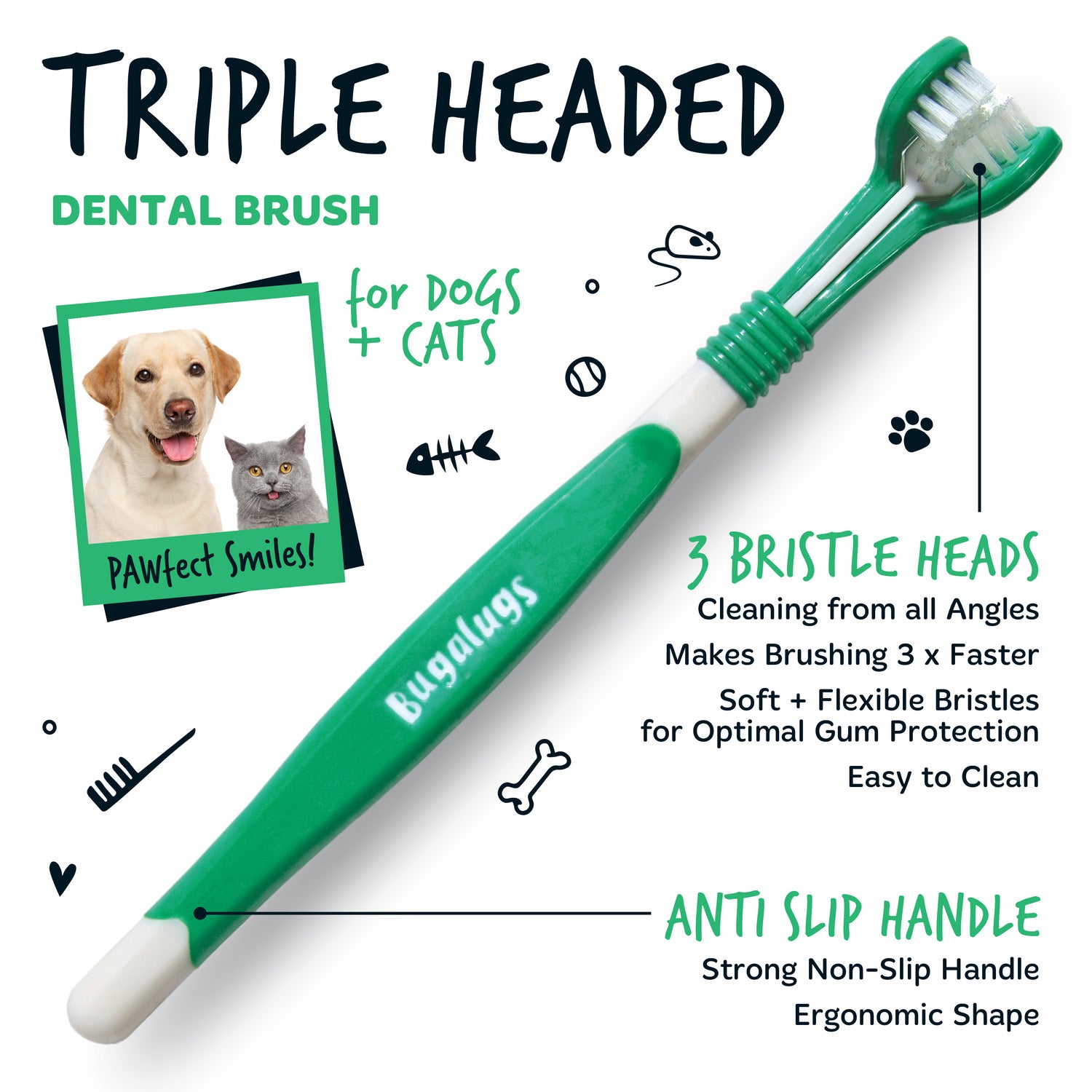
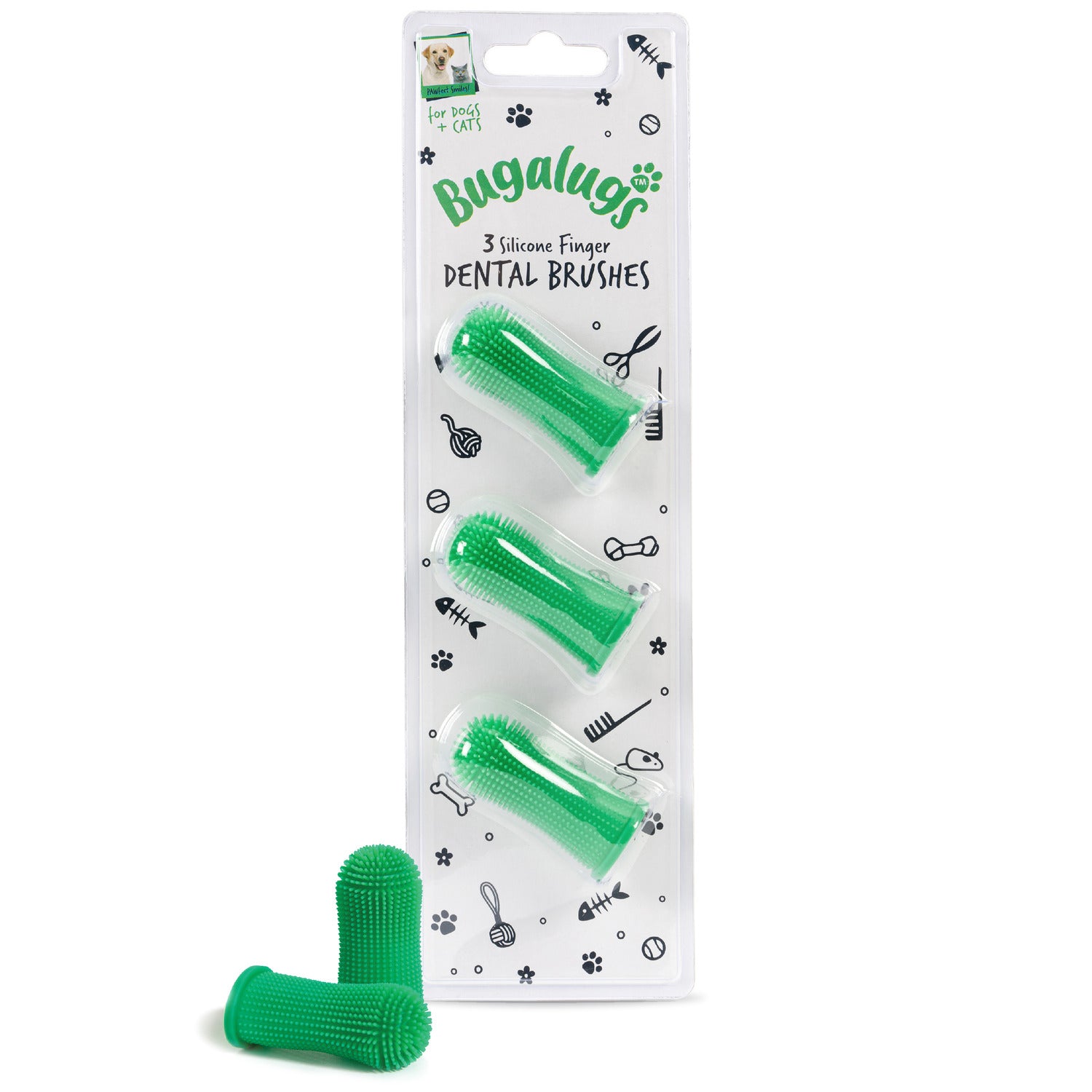
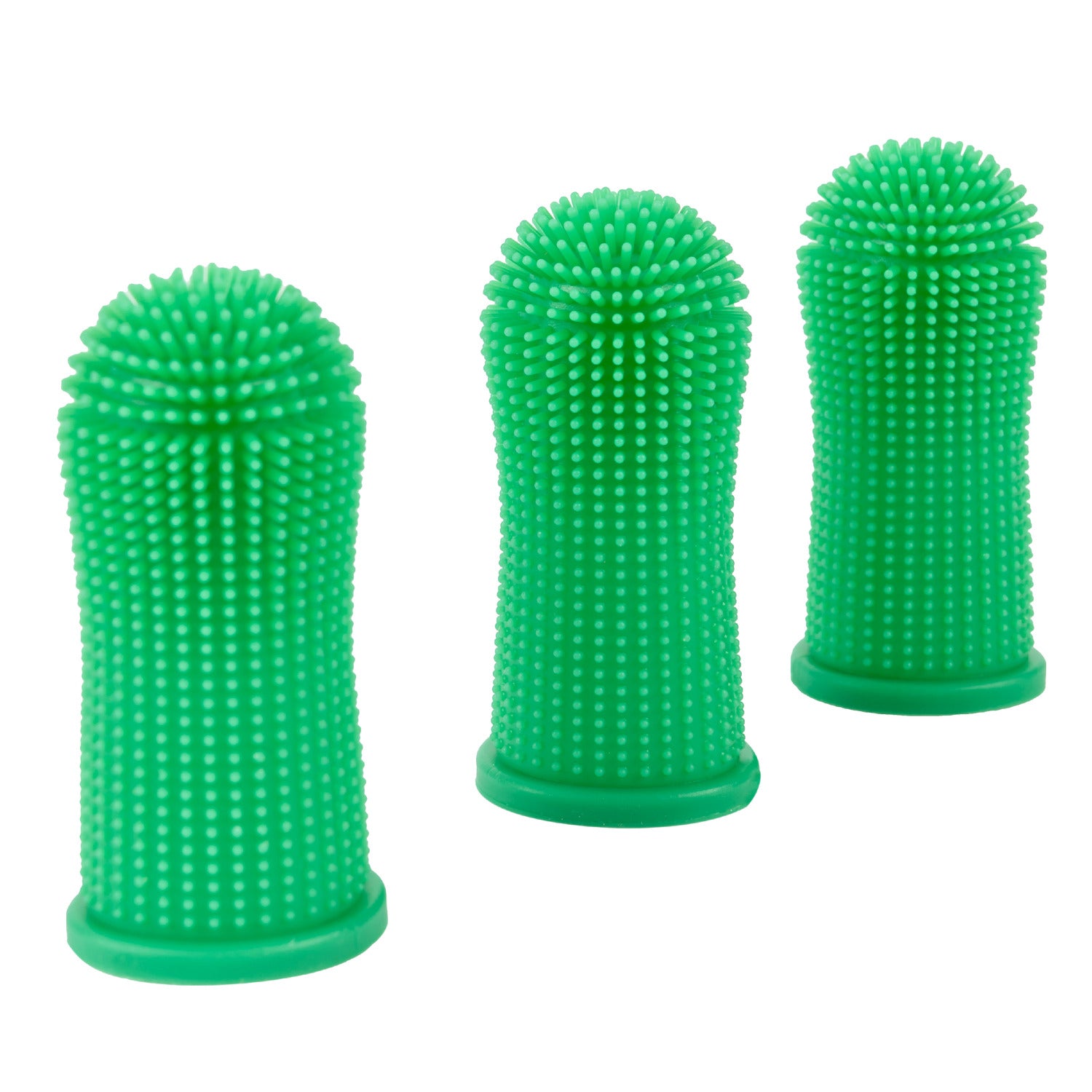
- Week 2: swap your finger for the brush. Start with the big teeth at the side and back, which build up the most plaque.
- Every time: keep sessions to 1–2 minutes and finish with praise or a treat.
For the best results, don't give food or water for about 30 minutes before and after brushing, so the enzymes have time to work.
How often should you brush your dog's teeth?
Once a day is ideal, because plaque can start to harden into tartar within a few days. If daily isn't realistic, aim for at least 3 times a week. Regular short brushes do more than an occasional long one.
What are the signs of dental problems in dogs and cats?
Bad breath is often the first sign. Others include:
- Yellow or brown tartar on the teeth, especially near the gums
- Red, swollen or bleeding gums
- Dropping food, or chewing on one side
- Pawing at the mouth or drooling more than usual
- Loose or broken teeth
When should you see a vet about your pet's teeth?
See your vet if you notice any of the signs above. Once plaque has hardened into tartar, brushing won't remove it, and your vet may recommend a scale and polish. After that, daily brushing helps keep the teeth clean.